
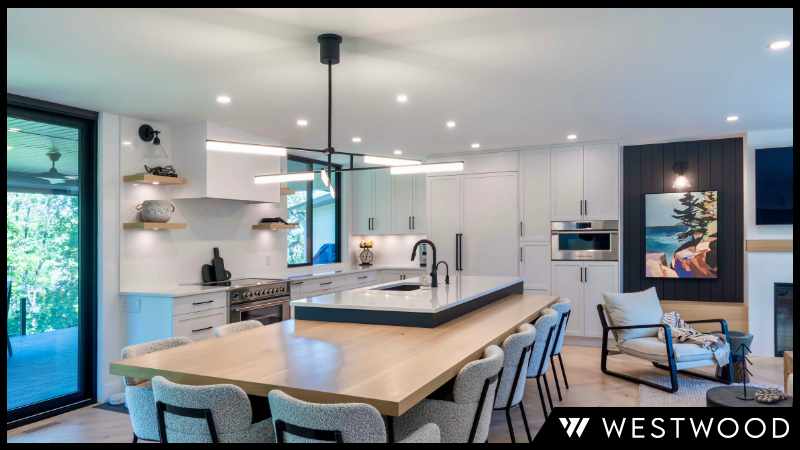
A kitchen island is no longer just a simple countertop—it's the heart of the home, and its design needs to reflect that. The latest trend, the layered island, moves past single-level surfaces to create a dynamic, multi-functional piece of furniture. Westwood Cabinetry designer Kati Knorr illustrates this perfectly by integrating a full dining table seamlessly into the island structure. This design solves the modern dilemma of balancing dedicated prep space with the need for a beautiful, large gathering area in open-concept homes.
In today's open-concept homes, the kitchen serves as the hub for cooking, dining, working, and entertaining. But trying to squeeze all these activities onto one flat island can lead to clutter, workflow issues, and an uncomfortable dining experience atop tall bar stools.
Enter the layered island. This innovative design concept creates different zones at varying heights, beautifully blending the functional demands of a kitchen with the comfort of a dining room. Designer Kati Knorr specializes in these high-end custom solutions, ensuring every Westwood kitchen is as practical as it is visually stunning. Her work demonstrates how this design truly elevates the modern lifestyle.
The key to a successful layered island is thoughtful zoning, as showcased in Kati Knorr’s design. This particular piece, crafted by Westwood Cabinetry, is not a simple two-tiered bar; it’s an integrated, multi-height structure that fulfills multiple distinct purposes:
The Working Core: The standard 36-inch countertop remains the high-functioning space for prep work, featuring built-in storage and easy access to the main kitchen area.
The Social Anchor: Extending from the core is a dramatically lowered surface (around 30 inches)—the ideal, comfortable height for a formal dining table. This creates a more intimate and relaxing dining experience compared to standard bar seating.
Visual Flow: Using matching or complementary materials, Westwood ensures the entire unit flows as one cohesive piece, anchoring the entire open-plan space. The integration eliminates the need for a separate dining table, maximizing floor space and enhancing the overall architectural aesthetic.
The result is a show-stopping design that encourages conversation, keeps the main kitchen organized, and supports the busy flow of modern family life.
The layered island is more than a trend; it's an evolution of the kitchen's role in the home.
Ready to transform your kitchen into a multi-functional masterpiece that maximizes both comfort and capacity? Trust the experts at Westwood Cabinetry to custom-build an island solution perfectly tailored to your space and lifestyle.
Connect with our award-winning team, including designer Kati Knorr, today to explore how a layered island can become the new heart of your home.
It can, but its success depends on the kitchen's layout. In smaller or narrower kitchens, the layered island (which includes the length of the dining area) can sometimes restrict traffic flow. It works best in medium to large open-concept spaceswhere the extended dining portion doesn't obstruct walkways or access to other zones.
A layered island is a multi-height, multi-functional kitchen structure that integrates two distinct zones: a standard-height work area (typically 36 inches) and a lower, standard dining-height table (typically 30 inches). Unlike a typical two-tiered island that uses the upper level for casual bar seating and hides sink/prep mess, the layered island is designed to create a comfortable, formal dining experience that flows seamlessly from the kitchen.
Storage is key! Westwood Cabinetry specializes in maximizing storage within the island structure. You can typically include deep drawers, open shelving, or cabinets on the vertical sides of the main island. The dining table portion is usually an open design to allow for comfortable seating, but the main island block remains highly functional for all your kitchen storage needs.
The primary benefits include:
Maximized Comfort: The lower dining surface allows for standard dining chairs, offering a much more comfortable seating arrangement than high bar stools.
Enhanced Functionality: It clearly zones the area, dedicating the upper level to prep/cooking and the lower level to dining/gathering.
Space Saving: It eliminates the need for a separate, free-standing dining table, which is crucial for maximizing space in open-concept homes.
Visual Appeal: The design creates a unique architectural feature that anchors the entire space.
Absolutely. In fact, varying the materials often enhances the layered effect!
The main island countertop (the working area) is often a durable material like quartz, Dekton, or granite.
The lower dining table layer can be a warmer material like a rich, solid wood slab or a contrasting stone, as seen in the custom designs from Westwood Cabinetry, to give it a furniture-like feel.
Whether you're transforming a living space or embarking on a new build, Westwood offers stylish and functional designs that elevate every room in your home. With a focus on exceptional quality, tailored solutions, and unmatched customer service, we bring industry insight and expertise to every project. Choose Westwood for outstanding cabinetry solutions that exceed your expectations. Connect with us today and experience the Westwood difference.